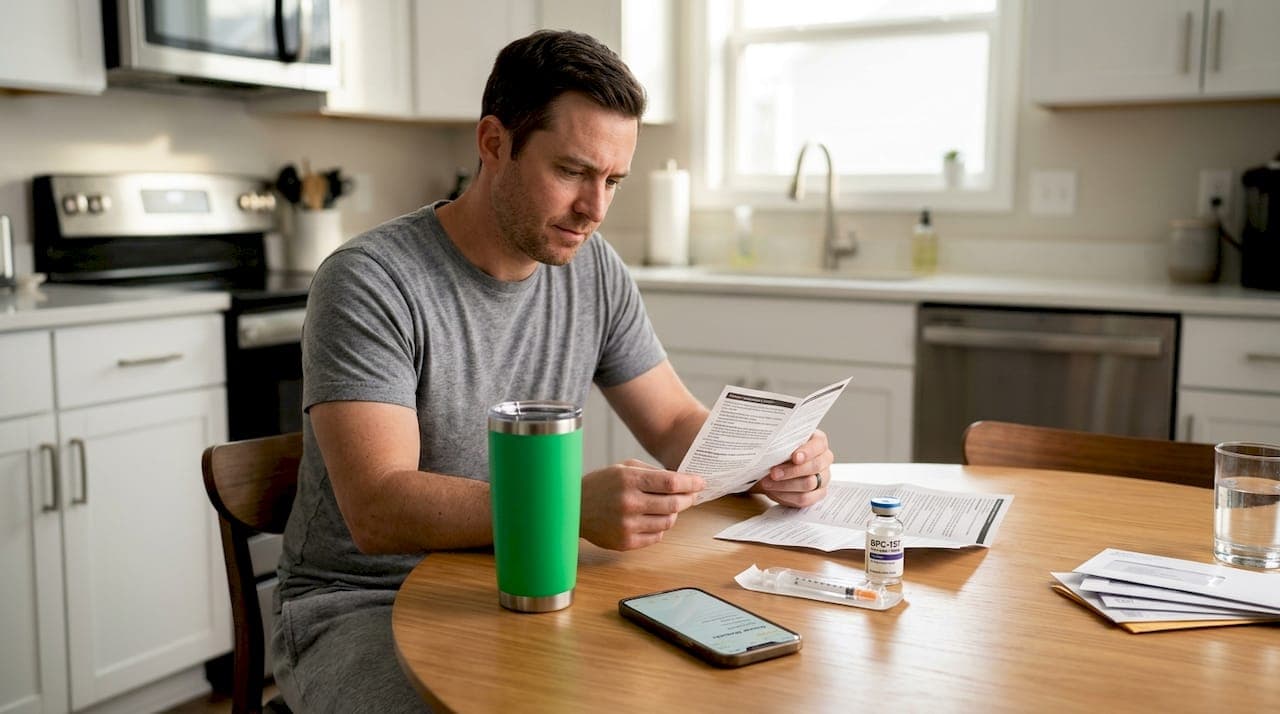
Most people who start BPC-157 therapy do so with a vague plan: inject somewhere around 250 mcg, hope for the best, and adjust if something feels off. That approach wastes time, money, and the genuine potential of one of the most researched recovery peptides available. A structured workflow changes everything. It removes the guesswork from dosing, timing, cycle management, and progress tracking. This article walks you through a complete, evidence-supported BPC-157 workflow, from understanding the mechanisms to monitoring your results with AI-driven tools, so you can get the most out of every cycle.
Table of Contents
- What is BPC-157 and why workflow matters
- Requirements and preparation for starting BPC-157
- Step-by-step BPC-157 usage workflow
- Monitoring, troubleshooting, and optimizing progress
- Why smart workflows beat guesswork in BPC-157 therapy
- Get AI support for your BPC-157 journey
- Frequently asked questions
Key Takeaways
| Point | Details |
|---|---|
| Follow proven dosing | Stick to 250–500 mcg daily, on for 4–8 weeks, then off for the same period. |
| Have the right tools | Prepare all materials, monitor your health, and use digital tools for reminders and logging. |
| Track, optimize, repeat | Monitor your progress, address issues early, and adjust the workflow based on consistent data. |
| AI support helps | Using AI can simplify and personalize BPC-157 routines for better results. |
What is BPC-157 and why workflow matters
BPC-157 stands for Body Protection Compound 157. It is a synthetic pentadecapeptide derived from a protein found naturally in gastric juice. In practical terms, it is a 15-amino-acid sequence that has shown remarkable tissue-repair properties across a wide range of preclinical studies. For anyone serious about recovery optimization, understanding what it does at the cellular level helps you design a smarter protocol.
The mechanisms of BPC-157 include angiogenesis via VEGF upregulation, nitric oxide modulation, fibroblast activation, collagen synthesis, and anti-inflammatory effects. In plain language, it promotes new blood vessel growth to injured tissue, activates the cells responsible for building connective tissue, and reduces the inflammatory signals that slow healing. This combination makes it particularly useful for tendon, ligament, and muscle injuries.
Here is a quick summary of BPC-157's core effects:
- Angiogenesis: Promotes new capillary growth to deliver oxygen and nutrients to damaged tissue
- Collagen synthesis: Activates fibroblasts to rebuild structural proteins in tendons and ligaments
- Nitric oxide modulation: Improves blood flow and reduces oxidative stress at injury sites
- Anti-inflammatory action: Downregulates pro-inflammatory cytokines without suppressing the immune system entirely
- Gut protection: Demonstrates mucosal healing properties, which may benefit athletes using NSAIDs
Important: While the preclinical data is strong, large human RCTs are lacking; most evidence is animal-based. Small human trials suggest safety, but this context matters when setting expectations.
So why does workflow matter so much? Because BPC-157 is not a set-and-forget compound. Its effects are dose-dependent, timing-sensitive, and influenced by injection site, cycle length, and concurrent therapies. People who approach injecting peptides like BPC-157 without a structured plan often underdose, miss injections, or fail to track whether the protocol is actually working. A clear workflow prevents all three of those failure modes and gives you a repeatable system you can refine over time.
Requirements and preparation for starting BPC-157
Before you inject anything, you need the right materials, a clean environment, and an honest assessment of your health status. Skipping this phase is one of the most common mistakes in peptide therapy, and it creates unnecessary risk.
Materials checklist:
- Lyophilized BPC-157 vial (sourced from a verified, third-party-tested supplier)
- Bacteriostatic water for reconstitution
- Insulin syringes (typically 29-31 gauge, 0.5 mL or 1 mL)
- Alcohol swabs for vial tops and injection sites
- Sharps container for safe needle disposal
- A digital log or AI tracking app for dose and symptom recording
Health considerations before starting:
You should not begin BPC-157 therapy if you have active cancer. The angiogenic properties that make it useful for healing can theoretically stimulate tumor vascularity. Severe peptide allergies are another contraindication. Physician clearance is strongly recommended, especially if you have any metabolic conditions, are on prescription medications, or are pregnant.
The standard BPC-157 dosing protocol is 250 to 500 mcg per day via subcutaneous injection, administered one to two times daily, for 4 to 8 weeks followed by an equal off period. Knowing this upfront helps you calculate how much product you need before starting, avoiding mid-cycle shortages.
| Preparation step | Details |
|---|---|
| Supplier verification | Third-party COA (certificate of analysis) required |
| Reconstitution ratio | 1 mL bacteriostatic water per 5 mg vial for easy dosing math |
| Storage | Reconstituted vial refrigerated at 2 to 8 degrees Celsius |
| Injection site selection | Subcutaneous abdomen, thigh, or near injury site |
| Tracking setup | Digital app or paper log with date, dose, and symptom notes |
Pro Tip: Set a daily phone alarm labeled with your dose and injection site. Rotating sites prevents localized irritation, and the alarm keeps your timing consistent. Even better, use AI support for peptide therapy to automate reminders, log doses, and flag missed injections before they disrupt your cycle.
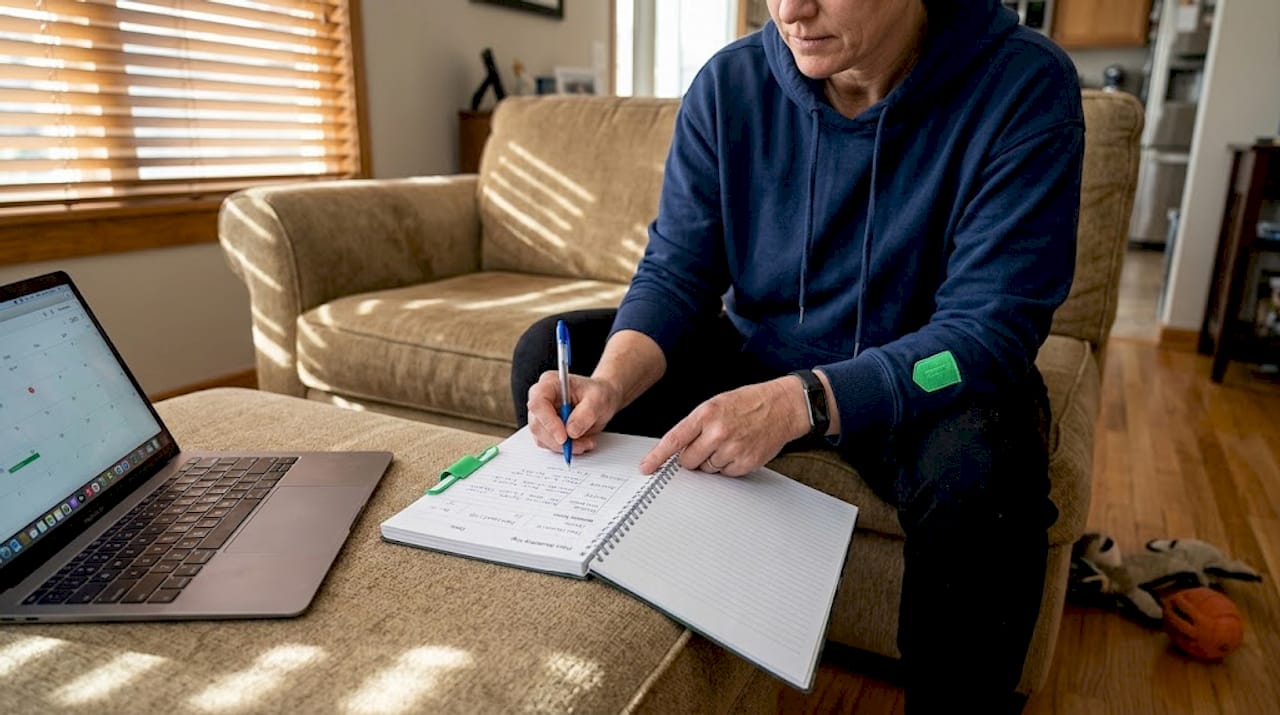
One often overlooked preparation step is establishing a baseline. Before your first injection, document your current pain level on a 1 to 10 scale, your range of motion in the affected area, and any sleep or performance metrics you track through wearables. This baseline becomes your reference point for evaluating whether the protocol is actually working at the four-week mark.
Step-by-step BPC-157 usage workflow
With your materials ready and your baseline documented, here is the exact sequence to follow for every injection. Consistency in technique matters as much as consistency in dosing.
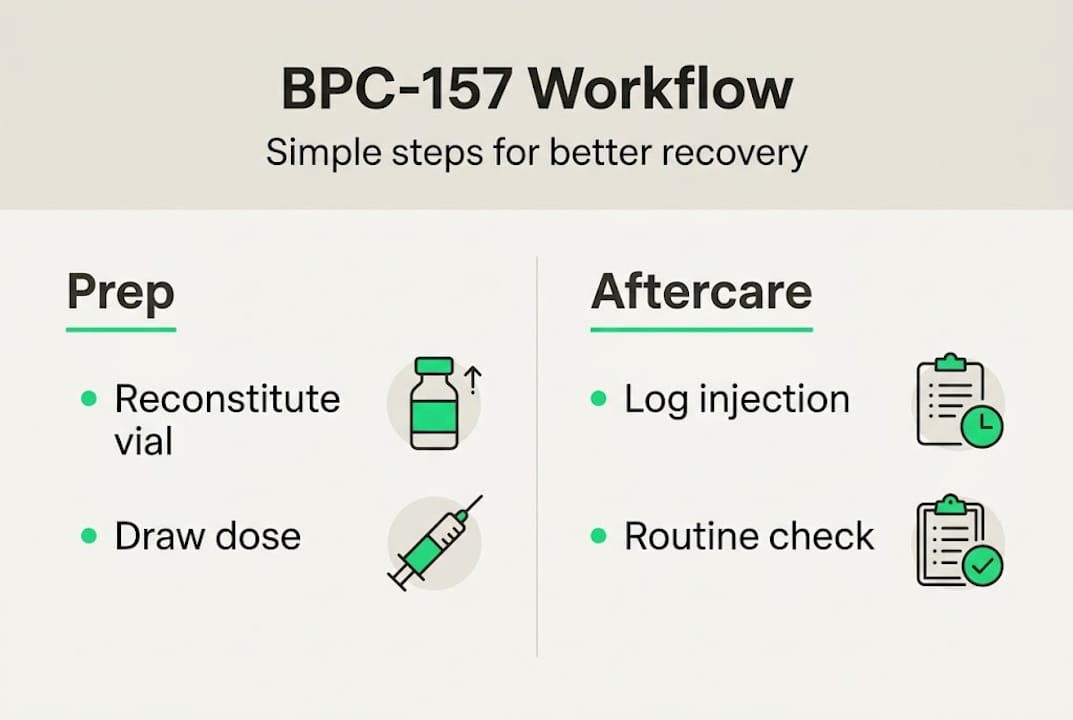
Step 1: Reconstitute the vial Draw the appropriate volume of bacteriostatic water into a syringe. Inject it slowly into the lyophilized BPC-157 vial by angling the needle against the glass wall, not directly onto the powder. Swirl gently. Never shake. Shaking degrades the peptide structure.
Step 2: Calculate and draw your dose If you have a 5 mg vial reconstituted with 1 mL of bacteriostatic water, each 0.1 mL contains 500 mcg. A 250 mcg dose equals 0.05 mL. Use an insulin syringe for precision. Draw slowly to avoid air bubbles.
Step 3: Select and prep your injection site Rotate between at least three sites: left abdomen, right abdomen, and upper thigh. Wipe the area with an alcohol swab and let it dry for 10 seconds. Wet alcohol on the skin can cause stinging and minor tissue irritation.
Step 4: Inject subcutaneously Pinch a small fold of skin. Insert the needle at a 45-degree angle. Depress the plunger slowly and steadily. Withdraw the needle at the same angle. Apply light pressure with a clean swab. Do not rub.
Step 5: Log the injection immediately Record the date, time, dose, site, and any immediate reactions. This data becomes critical for troubleshooting later.
Step 6: Post-injection routine If you are using BPC-157 for a specific injury, consider performing gentle range-of-motion exercises or physical therapy work within 30 to 60 minutes of injection. Some evidence suggests that mechanical loading on healing tissue enhances the collagen remodeling process that BPC-157 initiates.
The dose and cycle structure to follow is 250 to 500 mcg per day, one to two times daily, for 4 to 8 weeks on followed by 4 to 8 weeks off.
| Schedule type | Dose | Frequency | Cycle length |
|---|---|---|---|
| Standard | 250 mcg | Once daily | 4 weeks on, 4 weeks off |
| Moderate | 500 mcg | Twice daily | 6 weeks on, 6 weeks off |
| AI-customized | Adaptive | Based on biometric data | Adjusted per response |
Pro Tip: If you are pairing BPC-157 with physical therapy, time your injection one to two hours before your rehab session. The peptide's acute vasodilatory and anti-inflammatory effects may support better tissue response during loading. Always coordinate this approach with your physical therapist or physician when using safe peptide injection steps as part of a broader rehab plan.
"Injection site reactions and improper cycling are the two most common reasons people see suboptimal results. Rotating sites, respecting off periods, and not extending cycles beyond eight weeks without clinical justification are non-negotiable fundamentals." This reflects the consensus across clinical peptide practitioners.
Monitoring, troubleshooting, and optimizing progress
Running a BPC-157 cycle without tracking your response is like training without measuring performance. You lose the ability to know what is working, what needs adjustment, and when to stop.
What to track:
- Daily pain score (1 to 10 scale for the target area)
- Range of motion or functional movement quality
- Sleep quality and recovery metrics from wearables
- Any injection site reactions: redness, swelling, or persistent discomfort
- Energy levels and general well-being
Human anecdotes report 2 to 4 week improvements in pain and mobility on BPC-157. This gives you a practical benchmark. If you are at week three with zero change in your pain score and no improvement in mobility, something needs to be adjusted. Either the dose is too low, the injection site is not optimal for your injury, or there is an underlying issue the peptide cannot address alone.
Common troubleshooting scenarios:
- No effect at week three: Consider increasing from 250 mcg to 500 mcg daily. Ensure you are injecting subcutaneously, not intramuscularly.
- Injection site irritation: Rotate more aggressively. Use a new needle for every injection. Allow alcohol to dry fully before injecting.
- Overuse concerns: Do not extend beyond eight weeks without a break. The off period is not optional. It allows receptor sensitivity to reset and prevents diminishing returns.
- Plateau after initial improvement: This is normal. Continue the protocol through the full cycle before evaluating whether a second cycle is warranted.
| Monitoring metric | Standard tracking | AI-assisted tracking |
|---|---|---|
| Pain score | Manual daily log | Automated trend analysis |
| Mobility | Self-assessed weekly | Compared against baseline data |
| Sleep quality | Subjective notes | Wearable integration (Oura, Whoop) |
| Injection reactions | Visual check | Flagged anomalies in app |
| Cycle adherence | Calendar check | Automated reminders and alerts |
The advantage of AI-assisted monitoring BPC-157 effects is pattern recognition. A manual log tells you what happened. An AI system tells you what the pattern means and what to do next. If your sleep scores drop in week five while pain scores plateau, that correlation may indicate the need for a protocol adjustment or a closer look at recovery inputs like nutrition and training volume. You can also follow current research debates around peptide therapy to stay informed as new data emerges.
The goal of monitoring is not just to verify that BPC-157 is working. It is to build a personal dataset that makes every subsequent cycle smarter than the last.
Why smart workflows beat guesswork in BPC-157 therapy
Here is the uncomfortable truth most BPC-157 guides skip: the majority of people who report dramatic results online are also the people who tracked everything obsessively, followed consistent protocols, and iterated based on real feedback. They did not just inject and recover. They ran a personal experiment with controls.
The contrast between enthusiastic community reports and skeptical expert opinions citing a lack of human RCTs is real and worth taking seriously. Online forums are full of confirmation bias. Someone who feels better after four weeks of BPC-157 while also starting physical therapy, improving sleep, and reducing training load cannot confidently attribute all of that improvement to the peptide. A structured workflow with a documented baseline and isolated variables gives you something more valuable: actual signal.
There is no universal BPC-157 protocol that works for every body, every injury, and every lifestyle. The people who get the most out of this peptide treat it as a dynamic tool, not a fixed prescription. They adjust doses based on response, respect off periods, and use data to guide decisions. Unskeptical optimism is not a strategy. Slow, measured, and data-driven adjustments are. That is the mindset that separates people who see real results from people who spend money on peptides and wonder why nothing changed.
Get AI support for your BPC-157 journey
Running a clean BPC-157 workflow requires more than good intentions. It requires consistent tracking, smart dose management, and the ability to spot patterns in your data before they become problems.

Peptide AI was built specifically for this. The app lets you build and track your BPC-157 protocol with precise dosing schedules, automated reminders, and AI-driven insights backed by peer-reviewed research. The AI Insights Chatbot gives you real-time recommendations based on your logged data, while wearable integration with Apple Health, Oura Ring, and Whoop brings your biometric picture into one place. Whether you are running your first cycle or optimizing your fifth, Peptide AI gives you the infrastructure to do it right. Download it on iOS or Android and start your next cycle with a system behind you.
Frequently asked questions
What is the standard BPC-157 dosage for recovery?
The typical dosing protocol is 250 to 500 mcg daily by subcutaneous injection, for 4 to 8 weeks followed by an equal off period.
How soon will I notice results with BPC-157?
Some users report improvement in pain or mobility within 2 to 4 weeks, though individual response varies based on injury type, dose, and protocol consistency.
Is BPC-157 safe for everyone?
It should not be used with active cancer or without consulting a medical professional, as large-scale human safety data remains limited.
Can I combine BPC-157 with other therapies?
Many users combine BPC-157 with physical therapy to enhance recovery outcomes, but coordinating with your healthcare provider ensures the approach is appropriate for your specific situation.