
Peptide stacking is one of the most talked-about strategies in the biohacking community right now, and for good reason. Done right, combining two or three complementary peptides can produce synergistic effects that a single compound simply cannot match. But the surge in online protocols has created a noisy, confusing landscape where bad advice is everywhere and the stakes are real. Whether you're chasing faster recovery, better body composition, or optimized growth hormone output, this guide walks you through every step: what stacking actually means, how to prepare, how to execute a safe protocol, and how to know it's working.
Table of Contents
- Understand peptide stacking: Terminology and principles
- Preparation: What to know and do before you stack peptides
- Step-by-step protocol: How to stack peptides safely
- Monitoring progress and troubleshooting: How to know your stack is working
- Cutting through the hype: What actually works—and what doesn't—in peptide stacking
- Take the next step: Personalized peptide stacking with Peptide AI
- Frequently asked questions
Key Takeaways
| Point | Details |
|---|---|
| Start simple and strategic | Two-peptide stacks with proven synergy are safer and more effective than complex combinations. |
| Baseline labs are essential | Testing for IGF-1, glucose, and CRP before stacking can catch potential risks early. |
| Cycle and monitor closely | Follow 8-12 week stacking cycles with regular monitoring to maximize benefits and limit adverse effects. |
| Track both data and symptoms | Use both subjective improvements and objective lab results to gauge if your stack is working. |
| Use AI or digital support | Leveraging AI-driven tracking tools can personalize and optimize your stacking protocol safely. |
Understand peptide stacking: Terminology and principles
Peptide stacking means using two or three peptide compounds simultaneously or in a coordinated sequence to achieve effects that are greater than what either compound delivers alone. The logic is straightforward: different peptides act on different receptors or pathways, so pairing them creates what researchers call mechanistic complementarity.
Two stacks dominate the conversation right now. The first is the growth hormone (GH) stack, most commonly CJC-1295 paired with Ipamorelin. CJC-1295 is a growth hormone releasing hormone (GHRH) analog, meaning it signals the pituitary to produce more GH. Ipamorelin is a growth hormone releasing peptide (GHRP) that amplifies that signal through a separate receptor. Combining GHRH analogs like CJC-1295 with GHRPs like Ipamorelin boosts GH release far beyond what either peptide achieves alone. The second popular stack is the healing stack: BPC-157 plus TB-500. BPC-157 accelerates tissue repair at the local injury site, while TB-500 promotes systemic cell migration and reduces inflammation. Together, they cover both local and systemic recovery.
Here's a quick-reference table for the most common stack types:
| Stack type | Peptides | Primary use | Typical dosage range |
|---|---|---|---|
| GH optimization | CJC-1295 + Ipamorelin | Muscle growth, fat loss, sleep | 100-300 mcg each, 2-3x/week |
| Healing and recovery | BPC-157 + TB-500 | Injury repair, inflammation | 250-500 mcg BPC / 2-5 mg TB |
| Cognitive performance | Semax + Selank | Focus, stress resilience | 100-300 mcg each, daily |
Experts consistently recommend keeping stacks to two peptides, especially when starting out. A simpler stack is easier to troubleshoot, cheaper to run, and carries a more predictable risk profile. You can always find initial peptide use best practices before adding complexity.
"The most effective stacks are the ones you can actually monitor and adjust. Complexity is the enemy of clarity when you're working with compounds that have real physiological effects."
For a broader look at how peptide use is evolving, the overview of peptide stacking trends from GQ offers useful cultural and practical context.
Key benefits of a well-chosen two-peptide stack:
- Complementary receptor activity for greater effect
- Easier to isolate which compound is driving results
- Lower cost and simpler injection schedule
- Cleaner safety profile for lab monitoring
Preparation: What to know and do before you stack peptides
Before you combine any peptides, you need a clean baseline. Skipping this step is the single most common mistake serious biohackers make, and it costs them months of useful data.
Start with single-peptide tolerance testing. Run one peptide at a low dose for two to four weeks before introducing a second. This tells you how your body responds to each compound individually, which makes troubleshooting far easier later. Baseline labs and medical oversight are essential before stacking, not optional.
Minimum baseline labs to pull before starting:
- IGF-1 (insulin-like growth factor 1): your primary marker for GH activity
- Fasting glucose and insulin: critical for catching metabolic changes early
- C-reactive protein (CRP): your inflammation baseline
- Complete blood count (CBC) and comprehensive metabolic panel (CMP)
- Testosterone and estradiol if using GH-related stacks
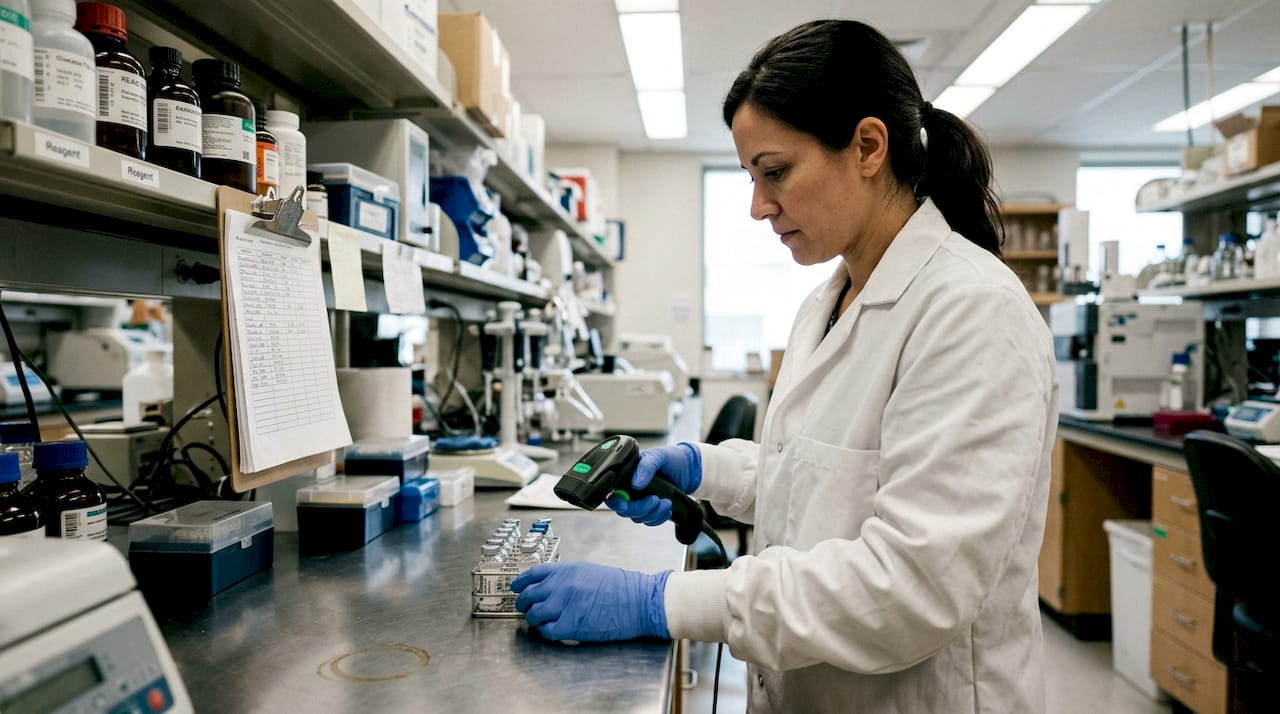
Source quality matters enormously. Peptides sold for "research purposes" vary wildly in purity. Look for suppliers that provide third-party certificates of analysis (COA) from independent labs. Avoid any source that cannot provide batch-specific testing data.
Contraindications are non-negotiable. A personal or family history of cancer is a hard stop before using GH-stimulating peptides, given their potential to promote cell proliferation. Metabolic conditions like type 2 diabetes also require careful evaluation, since GH stacks can impair insulin sensitivity.
| Preparation step | What you need | Timing |
|---|---|---|
| Baseline labs | IGF-1, glucose, CRP, CBC | 1-2 weeks before starting |
| Single-peptide trial | One peptide at low dose | 2-4 weeks before stacking |
| Medical consult | Physician familiar with peptides | Before any injection protocol |
| Sourcing | COA-verified supplier | Before ordering |
| Supplies | Bacteriostatic water, syringes, alcohol swabs | Ready on day one |
Pro Tip: Use an AI-powered tracking platform to log your baseline biometrics and set threshold alerts. Catching a glucose spike or an IGF-1 overshoot in week two is far easier when your data is visualized rather than scattered across paper logs. You can find tolerance assessment guidance to help structure this phase.
Step-by-step protocol: How to stack peptides safely
Once your baseline is set and your supplies are ready, execution is where precision pays off. Here is the sequence that minimizes risk while maximizing your ability to read results clearly.
- Week 1-2: Introduce peptide one at the lowest effective dose. For a GH stack, that means CJC-1295 at 100 mcg, injected subcutaneously before bed.
- Week 3-4: Assess tolerance. Log sleep quality, morning energy, hunger, and any injection site reactions. Adjust dose upward only if well tolerated.
- Week 5: Add peptide two. For the GH stack, introduce Ipamorelin at 100 mcg alongside CJC-1295. Start with single peptides, then add one at a time to assess tolerance before layering compounds.
- Week 6-12: Run the full stack. Most users find the optimal window for a GH stack is 8-12 weeks on, followed by a 4-week break to prevent receptor desensitization.
- End of cycle: Pull follow-up labs (IGF-1, glucose, CRP) and compare to your baseline before deciding whether to repeat or modify.
The synergy here is not trivial. GH stacks with CJC-1295 and Ipamorelin produce 2-3x GH release compared to using either peptide alone. That level of amplification is why the protocol and the monitoring both matter.
For injection technique, subcutaneous delivery into the abdomen or thigh is standard. Rotate sites to avoid lipodystrophy (localized fat changes from repeated injections). Oral peptides like BPC-157 are an option for gut-related applications, but most performance-focused stacks rely on subcutaneous injection for predictable absorption.
Pro Tip: Administer GH-stimulating peptides at night on an empty stomach. GH is naturally pulsatile and peaks during deep sleep, so nighttime dosing aligns with your body's own rhythm and amplifies the effect. You can find stepwise peptide stacking advice and a full peptide cycle protocol to refine your timing further.
Monitoring progress and troubleshooting: How to know your stack is working
A protocol without monitoring is just guessing. With your stack underway, staying proactive will amplify results and catch problems before they compound.
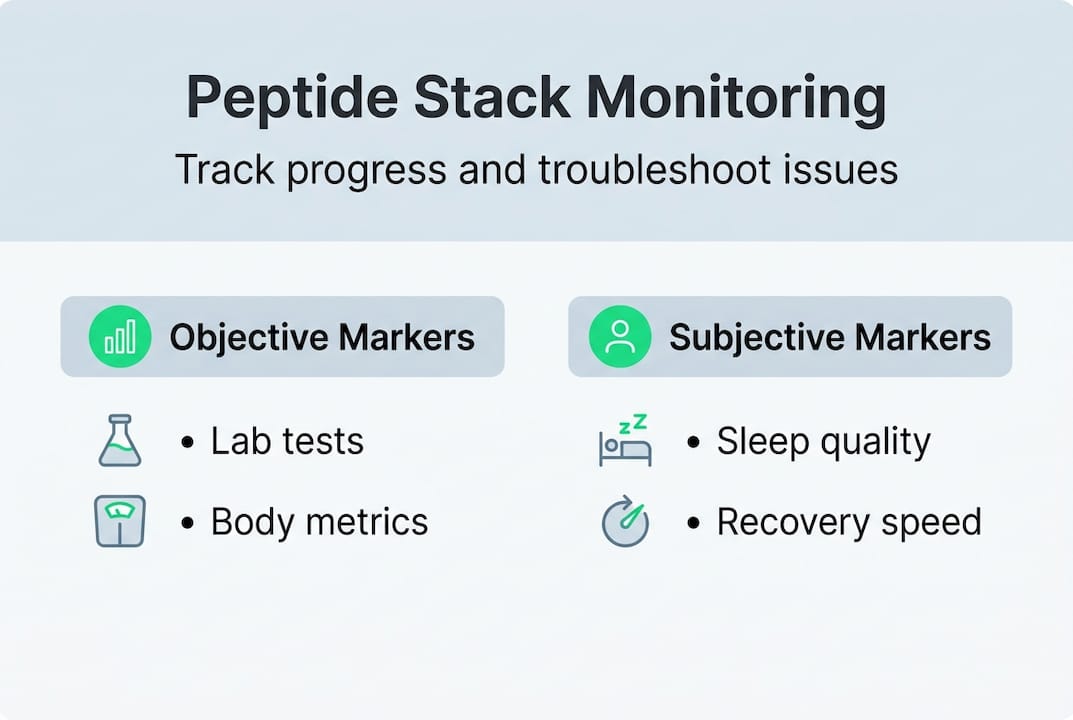
Track both subjective and objective markers. Subjective data includes sleep quality, morning energy, workout recovery speed, and mood. Objective data includes body composition changes (use photos and measurements, not just scale weight), follow-up bloodwork, and wearable metrics like HRV (heart rate variability) from an Oura Ring or Whoop.
Most users report noticeable changes within 6-12 weeks, particularly in recovery speed and body composition. Anecdotally, users report 10-30% better results stacking compared to single peptides, though individual variation is significant.
Monitor labs every 8 weeks, and report any additive side effects like glucose elevations or water retention to your physician promptly. These are the most common early warning signs that your stack needs adjustment.
When to adjust, pause, or stop:
- Fasting glucose rises above your personal baseline by more than 10-15 mg/dL: reduce GH stack dose or pause
- Persistent water retention or joint discomfort: lower CJC-1295 dose first
- IGF-1 climbs above the upper reference range: cycle off immediately
- Any new lumps, unusual cell growth, or unexplained fatigue: stop and consult a physician
- Injection site infections or persistent redness: review sterile technique and sourcing
"There are no robust clinical benchmarks for most peptide stacks. Your personal data is the most reliable guide you have. Treat every data point as signal, not noise."
Pro Tip: Use a tracking app or AI platform to monitor peptide stack effects over time. Patterns that are invisible in weekly logs become obvious when plotted across a full 12-week cycle. Platforms that integrate with Apple Health, Oura, or Whoop give you a real-time picture that paper tracking simply cannot match.
Cutting through the hype: What actually works—and what doesn't—in peptide stacking
Here is something most peptide content won't tell you: the complexity of your stack is inversely correlated with your ability to learn from it. Four-peptide "kitchen sink" protocols are popular online because they sound impressive. In practice, they make it nearly impossible to know what is driving your results or your side effects.
Two carefully chosen peptides, run with clean sourcing and consistent lab monitoring, will outperform a complicated regimen almost every time. The efficacy is higher because you can actually optimize dosing. The safety profile is cleaner. The cost is lower. And the data you collect is actually interpretable.
The clinical picture is worth being honest about. GH stack synergy is genuinely well-supported, with clear mechanistic evidence for why CJC-1295 and Ipamorelin work better together. But many other popular combinations are built on animal data or anecdote. Experts recommend simpler, synergistic stacks over complicated regimens, and always stress safety and data as the foundation.
The real competitive edge in 2026 is not a more exotic stack. It is better data. AI-driven platforms that analyze your biometrics, flag anomalies, and suggest protocol adjustments based on your actual response are changing what personalized AI-driven stacking looks like in practice. That is where the gap between average and optimized results is widest. For a contrarian take on whether more peptides always means better outcomes, contrarian peptide stacking perspectives are worth reading before you add a third compound.
Take the next step: Personalized peptide stacking with Peptide AI
Ready to move from protocol theory to a stack that is actually built around your biology? Peptide AI gives you a catalog of 50+ peptides, AI-generated protocol recommendations, and precise dosing schedules built for your goals.
The app's AI Insights Chatbot delivers real-time, research-backed answers when you need to make a dosing call. The AI Body Scanner tracks your physical transformation over time, and seamless integration with Apple Health, Oura Ring, and Whoop means your biometric data feeds directly into your Peptide AI personalized protocols. Stop guessing and start optimizing with tools built for serious biohackers.
Frequently asked questions
What is the safest way to start stacking peptides?
Start with single peptides, baseline labs, and add peptides gradually with medical oversight. Running one compound at a time for two to four weeks before stacking gives you a clean tolerance baseline and makes troubleshooting far simpler.
How long before you see results from a peptide stack?
Users report visible changes in 6-12 weeks, especially for healing or body composition goals. GH stacks may show sleep and recovery improvements earlier, often within the first two to three weeks.
Are there risks with combining peptides?
Yes. Risks involve additive effects, metabolic changes like glucose elevation, and heightened concern for anyone with a cancer history or access to low-quality sourcing. Medical oversight is not optional.
Is there clinical evidence that stacking works?
Strongest evidence is for GH synergy; human combination trials for most other stacks are limited. Mechanistic and animal data support many protocols, but robust human trial data remains sparse outside of GH-related combinations.